Lessons from the £900,000 L & L Europe Settlement
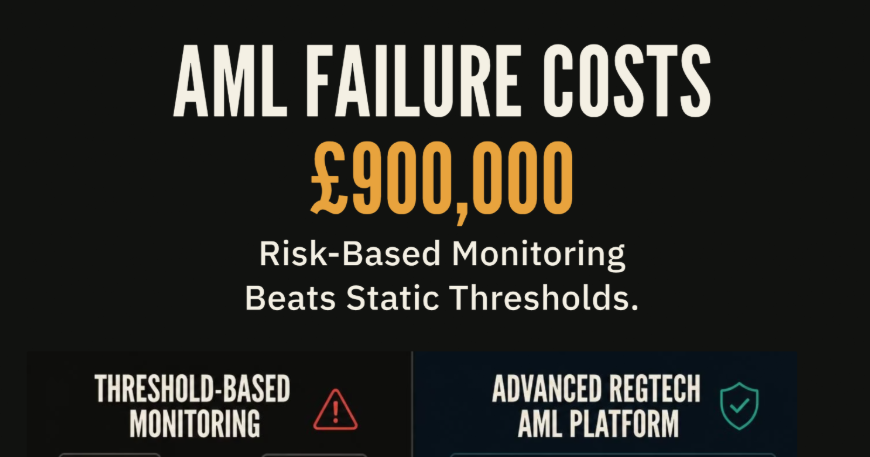
Why Fixed Financial Thresholds Fail: What the UK Gambling Commission's AML enforcement against L & L Europe teaches regulated sectors about risk-based customer monitoring.
"Good due diligence happens at onboarding and throughout the customer relationship, not at the exit door when they ask for their money."
On 21 October 2026, the UK Gambling Commission announced that L & L Europe Limited will pay £900,000 in a regulatory settlement. The company runs seven online casino websites. The headline issue was unfair withdrawal delays, but the investigation also found anti-money laundering (AML) and social responsibility failings. For anyone working in financial crime, the AML findings are the most useful part.
The Three Critical Gaps Identified
- 1. Controls based on thresholds, not risk: The Commission found that the operator’s money laundering and terrorist financing controls were largely built on financial thresholds and sampling at set points. They were not based on risk factors or customer risk profiles. In practice, a customer was reviewed because they hit a number, not because they looked risky.
- 2. Customer due diligence (CDD) not followed: The operator did not follow its own procedures. It did not consider the risks of newly opened bank accounts, nor did it evidence that money in customer accounts came from legitimate employment, business income or savings.
- 3. Checks at the wrong time (Exit-door CDD): Some customers were asked for extra information only when they tried to withdraw. The Commission’s rules stipulate that a withdrawal should not trigger new information requests if the operator could reasonably have asked earlier.
The same weaknesses appear in banks, payment firms, and crypto businesses. Fixed thresholds are easy to understand but easy to avoid. A launderer who knows the limit can stay under it, split funds across accounts, or move money quickly through newly opened accounts. A risk-based approach asks a better question: who is this customer, what do we expect them to do, and does their behavior match?
What Good Compliance Looks Like
- Dynamic customer risk scoring updated as behavior changes, not fixed at onboarding.
- Source of funds and source of wealth evidence collected early, proportionate to risk.
- Enhanced due diligence (EDD) triggered by risk signals: new accounts, unexplained funds, or velocity changes.
- Behavioral transaction monitoring spotting patterns like layering and rapid movement of funds, not just large single payments.
- Consistency across all brands, products, and websites, ensuring no compliance blind spots.
Where AI-Driven AML Intelligence Helps
This is where RegTech earns its place. SecuroQ’s AI-driven AML intelligence helps move firms from threshold-based rules to risk-based monitoring:
- Risk-based customer profiling: Combining customer, account, and behavioral signals into a live, continuous risk score.
- Smarter alerting: Flagging patterns such as rapid movement of funds, unusual account activity and mismatches between declared and actual funds.
- Consistent controls: Applying uniform logic across every product, brand or website, eliminating operational seams.
- Audit-ready evidence: Recording why a customer was flagged or cleared, giving compliance teams proof ready for supervisory audits.
Transition from Rigid Thresholds to Dynamic Risk-Based Monitoring
Discover how SecuroQ's Customer and Risk Engines automate ongoing behavioral profiling and prevent exit-door compliance delays.