Regulatory News, Typology Case Studies, Blogs & Webinars
Stay ahead of cross-border laundering networks, supervisory enforcement actions, AI governance standards, and executive webinars curated by our compliance research team.
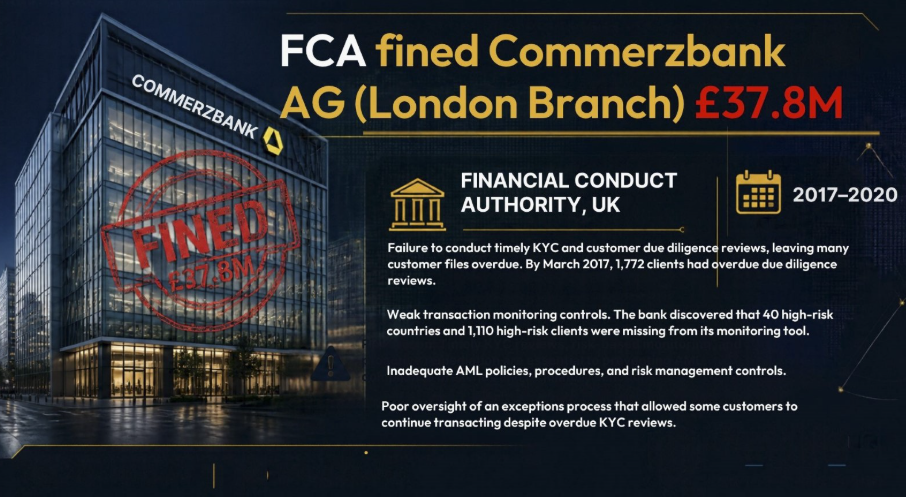
Commerzbank London's £37.8m AML Fine: Turning Historic Gaps into Continuous Controls
The FCA fined Commerzbank London £37,805,400 in June 2020 for weak anti-money laundering (AML) controls between October 2012 and September 2017. Every failing was a gap where continuous, data-driven monitoring is built to close.
Commerzbank London's £37.8m AML Fine: Turning Historic Gaps into Continuous Controls
The FCA fined Commerzbank London £37,805,400 in June 2020 for weak anti-money laundering (AML) controls between October 2012 and September 2017. Every failing was a gap where continuous, data-driven monitoring is built to close.
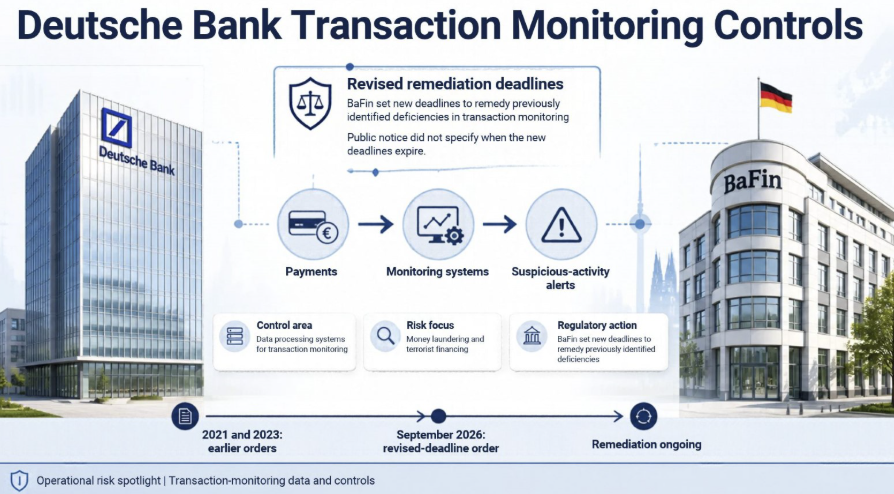
Deutsche Bank and BaFin: Why Transaction Monitoring Cannot Stand Still
Germany’s financial regulator, BaFin, has set Deutsche Bank new deadlines to fix shortcomings in the data-processing systems it uses to monitor transactions for money laundering and terrorist financing. Following earlier remediation orders in 2021 and 2023, the case demonstrates that transaction monitoring cannot be treated as a static one-off project. It must adapt continuously through explainable AI, behavioural risk scoring, and real-time data tuning.

61,800 Bitcoin, Two Courts and One Big Compliance Lesson
Between 2014 and 2017, Qian Zhimin defrauded over 102,000 investors of 40.38B yuan before fleeing China with a laptop holding her bitcoin wallet. On 12 October 2026, the London High Court ruled Chinese law governs victim claims, while a Tianjin court initiated parallel forfeiture. This historic $5.1B crypto asset recovery reveals critical AML lessons in fiat-to-crypto conversion, cross-border jurisdiction, and preventative monitoring.
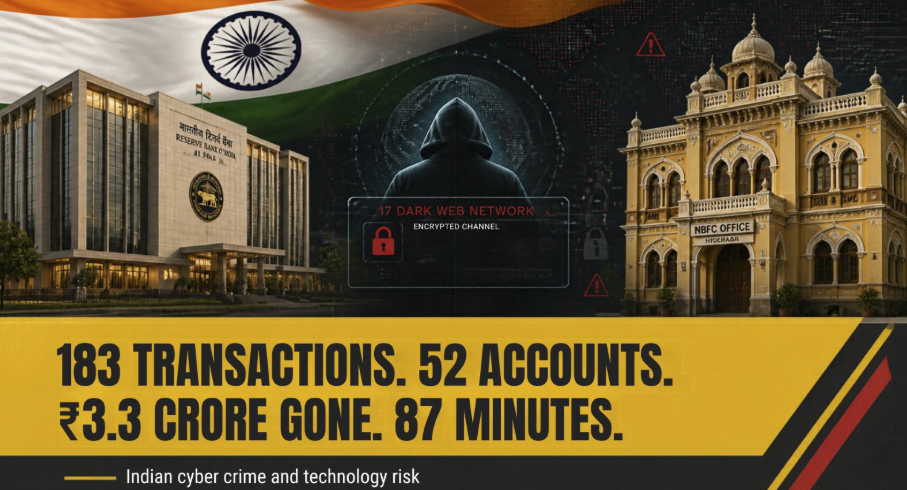
Case Study: ₹3.3 Crore in 87 Minutes
On 19 October 2026, an alleged cyber incident struck a Hyderabad NBFC, moving ₹3.3 crore into 52 recipient accounts via 183 disbursements in just 87 minutes. The case highlights the fatal speed of modern financial crime: fraud is the predicate offence, but rapid mule-network fan-out is the laundering vehicle. API limits and real-time velocity monitoring are vital under the RBI's 2026 NBFC Cybersecurity Directions.
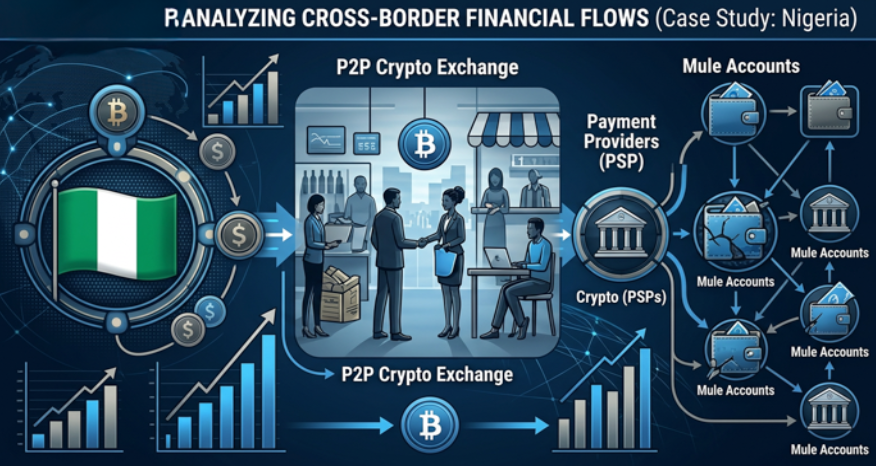
Case Study: INTERPOL Operation Serengeti III
In October 2026, INTERPOL concluded Operation Serengeti III across 21 African nations, arresting 1,462 suspects, dismantling 10,909 malicious cyber networks, and recovering over $105 million linked to $385M+ in illicit losses. The findings demonstrate that cybercrime, fraud, and money laundering are no longer distinct disciplines—they converge through P2P crypto exchanges, layered mule networks, and cross-border digital channels.

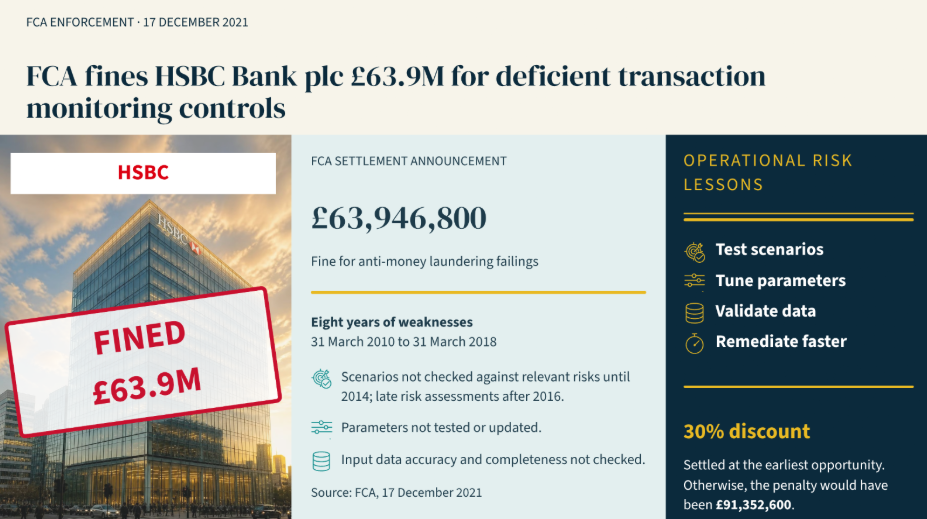
The Operational Risk Lesson from HSBC’s £63.9 Million Fine
In December 2021, the FCA fined HSBC Bank plc £63.9m for transaction monitoring deficiencies. The failure was not a lack of technology—the bank screened hundreds of millions of transactions monthly—but a breakdown in operational risk governance across scenario coverage, parameter tuning, and data quality.
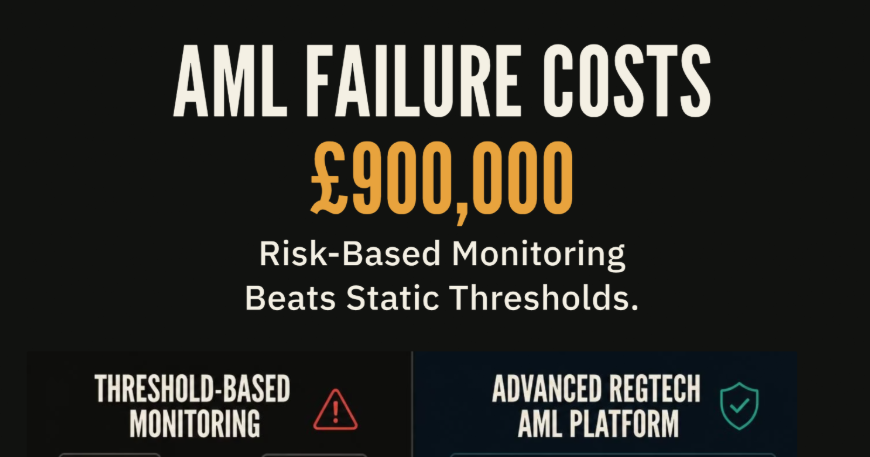
Lessons from the £900,000 L & L Europe Settlement
On 21 October 2026, the UK Gambling Commission announced a £900,000 regulatory settlement with L & L Europe Limited over AML and social responsibility failings. The case provides a masterclass in why rigid monetary thresholds, sampling shortcuts, and exit-door CDD leave institutions vulnerable to financial crime.
Mule Accounts and Deepfakes: AML Lessons from Hong Kong
Hong Kong's Legislative Council statement on 21 October 2026 highlights a troubling financial crime typology: criminals using stolen identities, coerced selfies, and deepfakes to open remote bank accounts that serve as money mule conduits. A case study in why onboarding liveness and transaction monitoring cannot operate in silos.
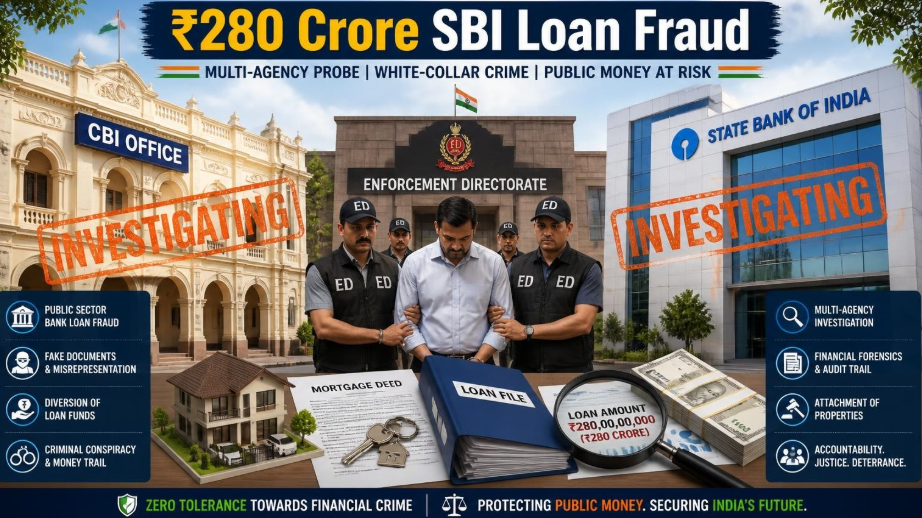
Case Study: The ₹280 Crore SBI Loan Fraud Investigation — Lessons for Modern Financial Crime Compliance
The reported ₹280 crore loan fraud investigation involving State Bank of India (SBI) and corporate borrower entities provides critical lessons for modern financial crime compliance. An in-depth analysis of loan fund diversion, beneficial ownership opacity, related-party transactions, and the failure of static onboarding controls.

The KuCoin Enforcement Action: Why KYC, AML Controls and Licensing Matter in Crypto
The KuCoin regulatory enforcement actions by the New York Attorney General and the U.S. Department of Justice highlight that crypto platforms cannot bypass core banking controls. An analysis of licensing mandates, customer identification duties, enhanced due diligence, and how SecuroQ's engines map directly to crypto compliance challenges.

The $337 Million Crypto Laundromat Busted from Poland to Georgia
Poland’s Central Cybercrime Bureau (CBZC) and Georgian police arrested leaders of a transnational cybercrime syndicate that laundered up to $350 million in stolen funds and ransomware proceeds. A compelling case study in Money Laundering as a Service (MaaS), mule account layering, and crypto wallet clustering.
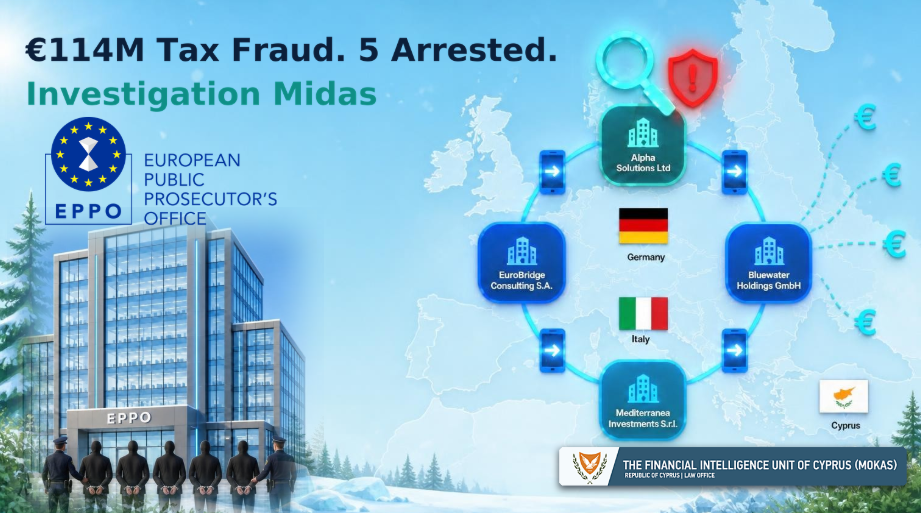
Same Phones, Endless Loop: The €114 Million Tax Fraud That Never Had to Move a Single Box
The European Public Prosecutor’s Office (EPPO) arrested five individuals across Cyprus, Germany, and Italy in a €114 million VAT carousel investigation involving smartphones. A stark case study in missing-trader intra-community fraud, buffer company chains, and the imperative for real-time funds velocity monitoring.
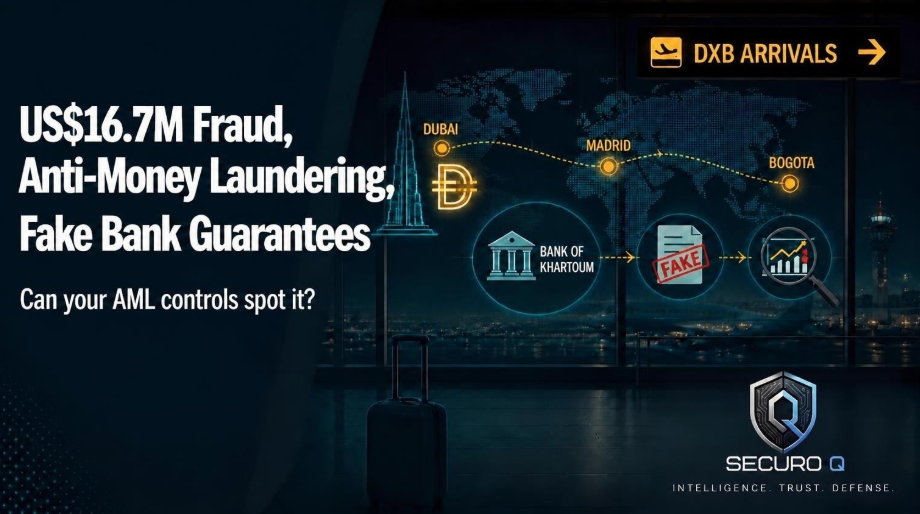
Four Passports, One Airport: How a $16.7 Million Dubai Bank Fraud Ended in Bogotá
On 15 October 2026, Interpol and Colombian police detained Mikhael Mezrahi ('El Banquero') at Bogotá’s airport on a UAE Red Notice for a $16.7M fraud against Bank of Khartoum’s Dubai branch. A masterclass in how multi-jurisdiction identities, fake guarantees, and staged simulations defeat checklist compliance.
RBI’s New FERR Rules: Is Your Bank Ready for the USD 2 Million Line?
On 10 and 12 October 2026, the RBI issued A.P. (DIR Series) Circulars No. 26 & 27 establishing the Foreign Exchange Risk Reserve (FERR) framework for Authorised Dealers. Banks face strict daily regulatory reporting, automated 5-point condition validation, and real-time forex derivative exposure controls.
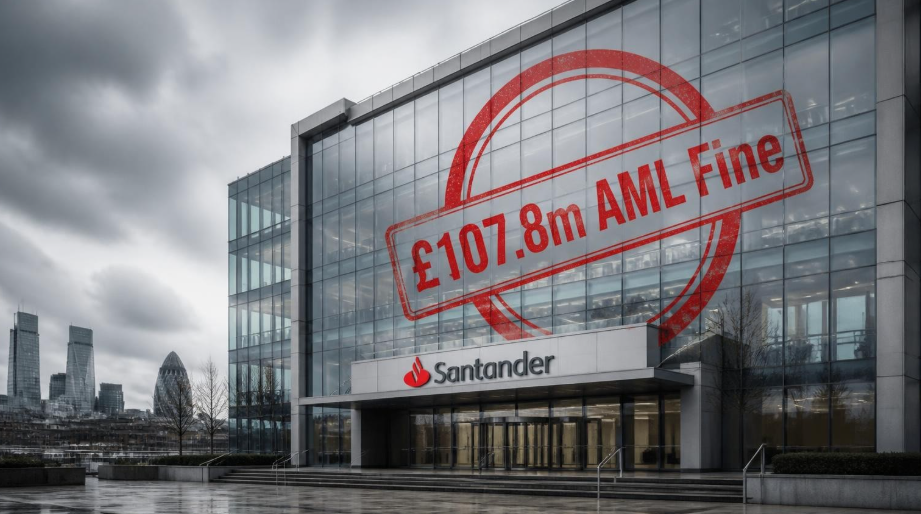
Santander UK’s £107.8m AML Fine: What the FCA Found, and What It Means for Financial Crime Teams
The FCA fined Santander UK £107.8m for serious, persistent AML control failures across 560,000+ business banking accounts. A case study in how unverified customer onboarding profiles, sluggish alert handling, and unmanaged MSB exposures created severe money laundering risks.

Why Wise's US Trust Bank License Was Refused: A Compliance Case Study
The OCC denied Wise's application to establish Wise National Trust, citing historical AML deficiencies and transaction monitoring data integrity issues. A vital case study proving that growth and innovation cannot offset unproven compliance controls when expanding into regulated banking.

£266 Million Through a Scrap Jewellery Business: What the Fowler Oldfield Case Teaches Financial Institutions
More than £266m was paid into Fowler Oldfield's NatWest accounts between 2014 and 2016. The warning signs were in plain sight—spread across onboarding files, sudden volume spikes, and cash handling records—underscoring why fragmented controls fail without a unified financial crime intelligence layer.

Japan Arrests Staffing Firm Chief Over Alleged Crypto Laundering of Scam Funds
Tokyo Metropolitan Police arrested an Osaka staffing company CEO and accomplices for laundering ¥91M in investment scam proceeds through an unregistered 'Aitaiya' crypto brokerage. The case underscores multi-hop dispersion, stablecoin off-ramps, and the urgent need for cross-institutional real-time monitoring.
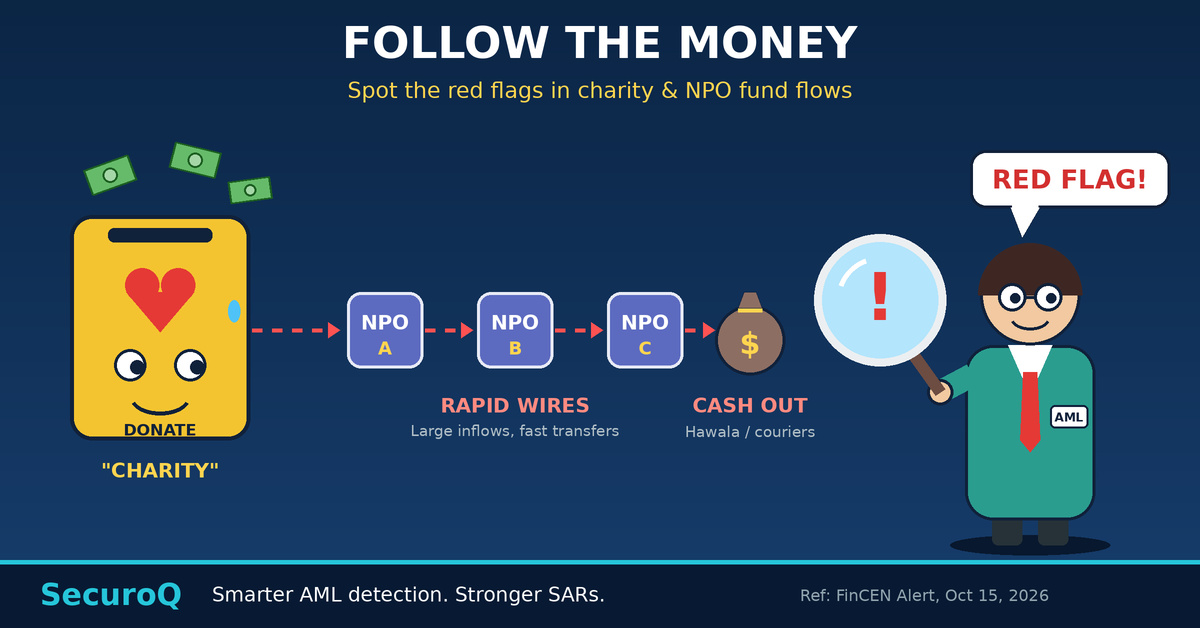
US Warns Banks Over Iranian Misuse of Religious Charities
The US Treasury and FinCEN have issued an alert directing financial institutions to detect and report Iranian regime abuse of religious charity networks and khums tithes. Compliance teams must balance rigorous link analysis against blunt de-risking of legitimate charities.

How One Fictional Scam Shows Where Banks' Compliance Defences Can Fail, and How Smarter Monitoring Can Close the Gap
A composite case study illustrating common pension scam patterns: how an unexpected high-value credit followed by rapid multi-hop dispersion evades legacy static rules, and how SecuroQ's behaviour-based Scenario 01 detects the sequence before funds vanish.
Switzerland's Money Laundering Risk Holds Steady, but Crypto and Cross-Border Flows Raise the Stakes
Switzerland's 2026 National Risk Assessment reports overall AML exposure remains stable, but warns that virtual assets and transnational wealth flows significantly elevate systemic vulnerability. Compliance leaders must align internal transaction monitoring and crypto screening with the Federal Council's findings.
Two Plead Guilty After £2M Client Fraud, as Regulators Ask Who Was Watching
Two directors of Nexus Independent Financial Advisers and Nexus Investment Managers pleaded guilty to £2m client fraud and money laundering charges brought by the FCA. A case study in how unverified paperwork, concentrated insider control, and unmonitored outflows went undetected for four years.
Bank of America Fined $1.2Bn Over Lax Money-Laundering Controls
On 14 October 2026, the US Treasury and OCC announced a landmark $1.2bn penalty against Bank of America for systemic anti-money laundering failures, unmonitored correspondent flows linked to Russia, Belarus, and Mexico, and chronic delays in filing Suspicious Activity Reports (SARs).
FCA and NCA Arrest Three in Raid on Suspected Insider Dealing and Money Laundering Network
On 14 October 2026, the FCA and NCA conducted joint dawn raids across London and Manchester, arresting three suspects in a major insider dealing and money laundering probe. An analysis of why banking AML teams must monitor rapid fund movement and layering following market abuse trades.
Dutch Regulator Fines Modulr €722,160 Over Weak Anti-Money Laundering Checks
On 13 October 2026, details emerged of De Nederlandsche Bank fining Modulr Finance B.V. €722,160 for outsourcing customer monitoring without maintaining an independent view of risk. A crucial lesson for fintechs and payments firms on why compliance responsibility cannot be handed off to intermediaries.
Cyprus Fines Banque SBA €750,000 Over Anti-Money-Laundering Failures
On 13 October 2026, the Central Bank of Cyprus announced a €750,000 fine on Banque SBA Cyprus for AML/CFT deficiencies following a 2023 supervisory inspection. A critical case study in why banks must prove and document that their controls work in practice.
Danske Bank Fined $2Bn Over Vast Money-Laundering Scandal
Danske Bank agreed to pay $2bn to US and Danish authorities after admitting to one of the largest money-laundering scandals in modern banking history. Investigators found €200bn in suspicious non-resident funds flowed through shell companies due to decentralized governance and fragmented systems.
Inside 'Hermes': How a €410M VAT Carousel Hid in Plain Sight
On 7 October 2026, EPPO-led Operation Hermes carried out over 300 searches across 8 European countries, detaining 62 people in an alleged €410M VAT carousel fraud involving mobile phones. A case study in why network visibility is vital for modern AML.
India's Financial Crime Agency Arrests Media Group Chairman Over Alleged ₹1.68 Billion Insolvency Scheme
On 12-Oct-2026, the Enforcement Directorate arrested the Sadhna Group chairman in a ₹168 crore money laundering case. A stark reminder of how related-party networks and off-book channels bypass conventional banking monitoring.
Malaysia's Compliance Wake-Up Call: BNM Penalties Highlight Customer Due Diligence & Sanctions Screening Risks
Bank Negara Malaysia penalises three money services businesses for customer due diligence and sanctions screening failures, proving regulators are scrutinising day-to-day operational execution.
$350 Million Penalty: American Express & The $13B Trade-Based Money Laundering Gap
American Express National Bank hit with a $350 million penalty over deficiencies in trade-based money laundering monitoring, risk assessments, and internal controls.
€200 Million Gold Money Trail: Cross-Border Laundering & Entity Resolution
German, Dutch, and Turkish authorities uncover a major drug proceeds laundering network using gold jewellery transactions. What does this mean for modern AML monitoring systems?
2026 Global AML & Sanctions Enforcement Horizon
Supervisory authorities worldwide are tightening UBO transparency rules and demanding automated model risk validation for AI-assisted monitoring systems.
Detecting Synthetic Identity Fraud in Instant Payments
Synthetic identity fraud accounts for over $6B in annual banking losses. Learn how entity resolution and graph risk scoring stop instant payment fraud.
Model Risk Management for Generative AI in Compliance
How to safely leverage AI decision support for SAR drafting and alert disposition without compromising regulatory compliance or model explainability.
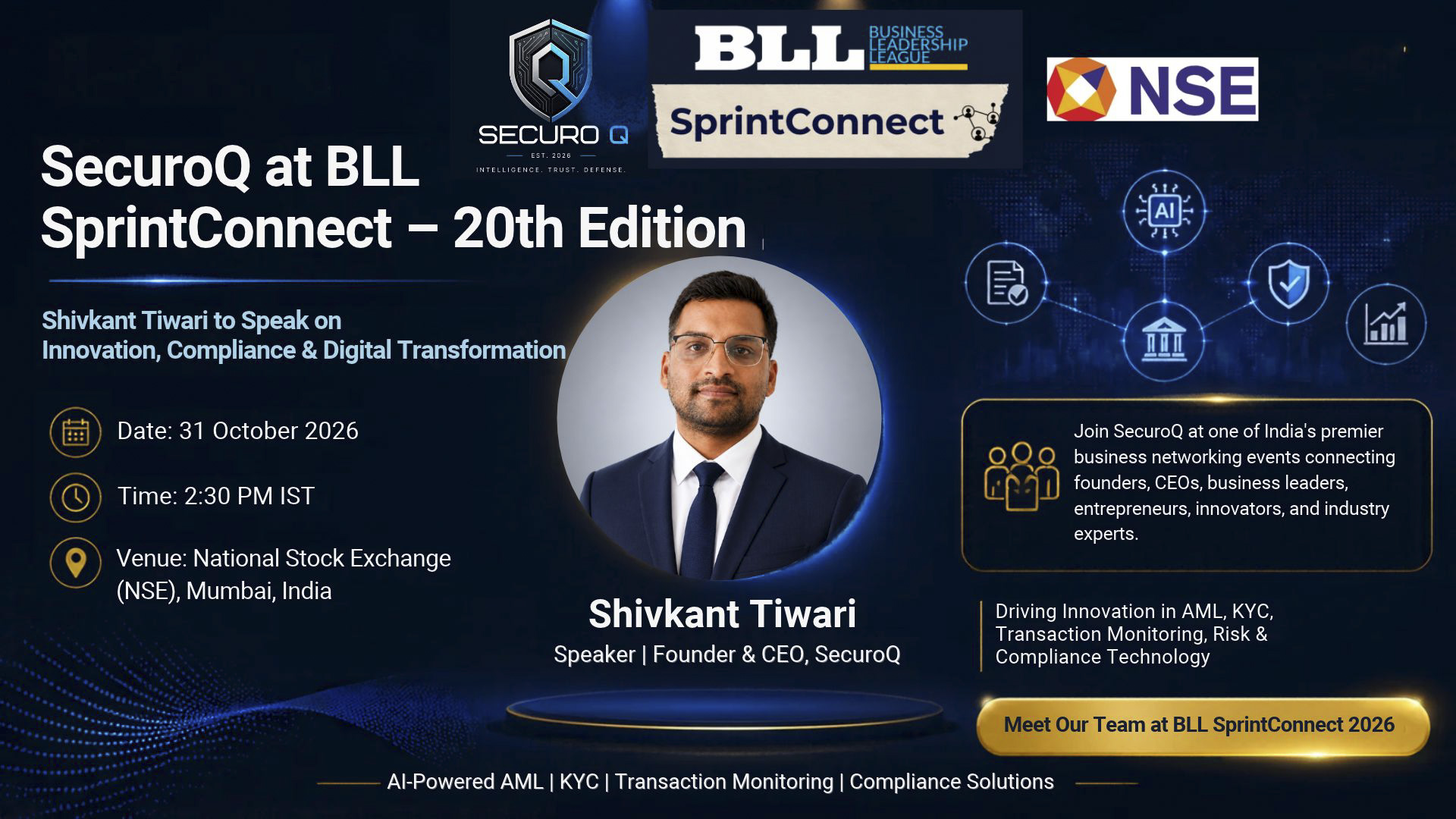
SecuroQ at BLL SprintConnect – 20th Edition
Keynote address by Shivkant Tiwari (Speaker | Founder & CEO, SecuroQ) on Innovation, Compliance & Digital Transformation at the National Stock Exchange (NSE), Mumbai.