US Warns Banks Over Iranian Misuse of Religious Charities
FinCEN issues alert FIN-2026-Alert008 under Operation Economic Outcast, directing banks to watch for diversion of khums tithes and religious donations by Iranian state proxies.
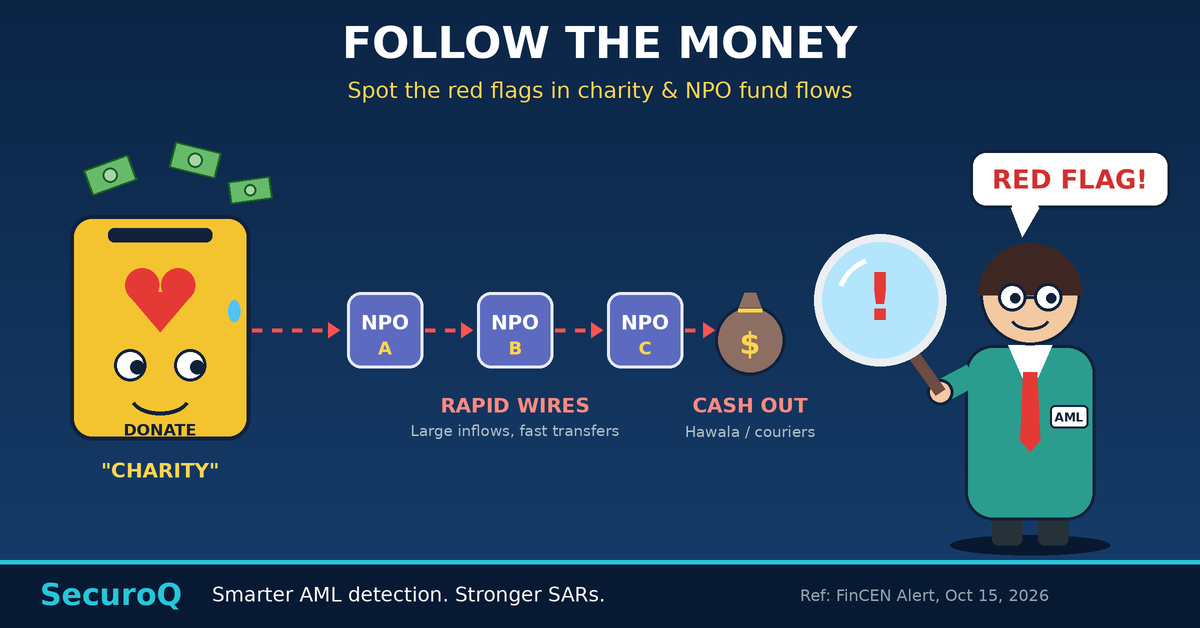
"The US Treasury has asked banks to watch for signs that Iran is diverting religious donations, raising fresh questions for compliance teams worldwide."
On Thursday 15 October, the US Treasury's Financial Crimes Enforcement Network (FinCEN) issued an alert asking financial institutions to report suspected Iranian abuse of religious charity networks. The alert covers the possible diversion of khums, the religious tithe paid by many Shia Muslims. It forms part of Operation Economic Outcast, a Treasury campaign to isolate the Iranian government and its financial enablers. Treasury Secretary Scott Bessent said Washington would not allow Tehran to keep exploiting religious institutions to enrich its elites and fund terrorism.
The allegations are the US government's. Treasury says Iran has long used ostensibly religious organisations, in Iran and neighbouring countries, to benefit its elites, fund repression at home and support terrorism abroad. It adds that some groups collecting khums act for prominent ayatollahs with ties to the government, and may send the money onward through hawalas, which are informal transfer networks, or by cash courier.
FinCEN stressed that legitimate charities should keep access to financial services and can move money through transparent channels.
The Red Flags: Four FinCEN Typology Indicators
FinCEN lists four indicators, which it says add to earlier alerts on Iran-backed groups and Hamas. No single one proves wrongdoing, and banks are told to weigh the whole picture and the customer's history:
- No Visible Good Works: A charity solicits donations but appears to provide no charitable services, or openly backs the Iranian government or its proxies in appeals or on social media.
- Fast In, Fast Out: Large donations arrive from an unknown source over a short period, followed quickly by significant wires or cheques to other charities.
- Dodging the Paperwork: A charity or its staff try to avoid reporting or record-keeping rules, for example by cancelling a cash transaction once told a report would be filed, or by splitting deposits to stay under $10,000.
- Unexplained Pass-Through: A customer receives transfers from a charity with no clear business link, then withdraws the cash or sends it on.
The common thread is money that moves faster, and further, than any stated charitable purpose would explain.
Where the Gaps Are
The alert exposes a tension compliance teams know well. US regulators have said the charity sector is not uniformly high-risk, and banks are neither barred nor discouraged from serving charities. Yet banks must still understand each charity's purpose, monitor its activity and report anything suspicious. Four weaknesses are likely to show first:
- Thin Customer Files: A 2020 joint fact sheet says banks may find it useful to record a charity's mission, programmes, locations, governance, funding sources, beneficiaries and affiliations. Without them, a surge in donations is hard to judge.
- Blunt Risk Labels: Treating every charity as risky penalises legitimate work. Treating none as risky misses abuse.
- One-Account-at-a-Time Monitoring: Money that lands in one charity and leaves days later for another looks routine account by account. It stands out only when links between customers are mapped.
- Reporting Discipline: FinCEN wants related suspicious activity reports (SARs) tagged FIN-2026-IRANCHARITYABUSE, in both the filing note and the narrative. A team that cannot find and group the cases cannot do that.
What It Means for SecuroQ
SecuroQ, a financial crime intelligence provider whose customers include banks, fintechs, payment firms, crypto platforms and wealth managers, operates in the territory the alert describes. Platform engines map directly to the gaps above: Customer Engine addresses thin charity files and hidden entity links; Transaction Engine is tuned to large inflows followed by rapid onward transfers; Risk Engine supports risk-based scoring over blanket labels; and Investigation Engine helps trace charity-to-customer-to-cash chains for defensible SAR filing.
Closing the Gaps: Five Practical Steps
- Refresh Charity and NPO Files: Capture mission, programmes, locations, governance, funding sources, beneficiaries and affiliations, and rate risk on those specifics rather than on sector alone.
- Turn Red Flags into Tested Scenarios: Model large inflows followed by quick transfers to other charities; charity payments to unrelated customers who then withdraw cash; and cash deposits kept just under $10,000.
- Map the Links: Connect charities, officers, counterparties and recipients across customer records, so a chain of transfers is read as one story.
- Report Consistently: Put FIN-2026-IRANCHARITYABUSE in field 2 and the narrative of each relevant SAR, and record why alerts were closed.
- Keep Legitimate Charities Banked: FinCEN says transparent non-profits should retain access to financial services, so document the reasoning when a relationship continues.
A framework review, such as the Financial Crime Health Check SecuroQ offers, can show which gaps a firm has before a supervisor asks.
"Sources: FinCEN Alert FIN-2026-Alert008 (15 October 2026); US Department of the Treasury Operation Economic Outcast Release (15 October 2026); Federal Reserve, FDIC, FinCEN, NCUA, OCC Joint Fact Sheet on Charities (19 November 2020); FinCEN Treasury Convening (September 2026); SecuroQ (securoq.com)."
Benchmark Non-Profit & Sanctions Screening Defences
Discover how SecuroQ's Customer and Risk Engines eliminate blanket de-risking while detecting pass-through diversion networks and rapid donation velocity.